


 English
 中文简体
中文简体
ADEYTOS
ADEYTOS
ADEYTOS
ADEYTOS
ADEYTOS
ADEYTOS
ADEYTOS
ADEYTOS
ADEYTOS
ADEYTOS
ADEYTOS
ADEYTOS
ADEYTOS
ADEYTOS
ADEYTOS
ADEYTOS

Industry News
Home / News / Industry News / How Are Smart Manufacturing Trends Reshaping the Global Power Tools Industry?
Industry News
How Are Smart Manufacturing Trends Reshaping the Global Power Tools Industry?
The global power tools industry is entering a new stage driven by automation in production, rising labor costs, and increasing demand for high-performance outdoor equipment. From construction sites and forestry operations to landscaping and infrastructure maintenance, users are focusing more on tool reliability, operational efficiency, and lifecycle cost control. In this context, the role of a Professional Power Tools Supplier is expanding beyond product delivery to include engineering consistency, quality assurance, and long-term supply stability.
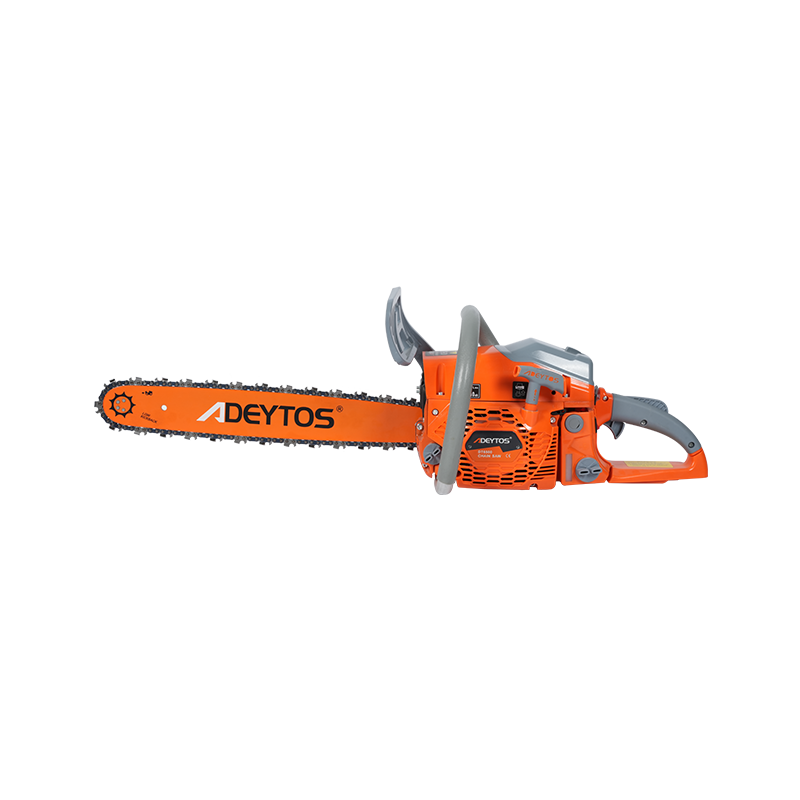
Recent industry discussions and search trends show strong interest in improved engine stability, modular repair design, and high-efficiency cutting systems for demanding outdoor applications.
Why Is Manufacturing Precision Becoming a Key Competitive Factor?
As global buyers become more technical, they are no longer satisfied with basic functional performance. Instead, they expect precision engineering that ensures consistent output under different working conditions.
Key expectations include:
- Tight tolerance control in mechanical components
- Stable assembly quality across production batches
- Reduced performance variation between units
- Improved overall tool balance and operation smoothness
Precision manufacturing is now directly linked to product reliability in the field.
How Is Material Engineering Improving Tool Lifespan?
Power tools used in forestry, construction, and agriculture are exposed to high stress and harsh environments. Material selection plays a crucial role in determining long-term durability.
Industry improvements include:
- High-strength alloy components for critical parts
- Wear-resistant coatings for extended service life
- Heat-resistant engine materials for stable operation
- Reinforced structural housing for impact resistance
Better materials reduce failure rates and improve overall efficiency.
Why Is Modular Design Becoming More Popular in Maintenance Systems?
Maintenance efficiency is becoming a major concern for professional users who rely on tools for daily operations. Modular design simplifies repair and reduces downtime.
Key benefits include:
- Faster replacement of worn components
- Reduced need for specialized repair tools
- Lower maintenance training requirements
- Improved field service efficiency
This trend is especially important for remote or high-intensity working environments.
How Is Engine Efficiency Affecting Gasoline Tool Development?
Gasoline-powered tools remain widely used in outdoor applications, but efficiency expectations continue to rise due to cost and environmental considerations.
Current engineering focus includes:
- Improved fuel combustion efficiency
- Reduced emissions output during operation
- More stable power delivery under load
- Enhanced cooling systems for long working cycles
These improvements help balance performance with operational cost control.
Why Is Operator Comfort Becoming a Design Priority?
In professional environments, tools are often used for extended periods, making ergonomics and comfort essential for productivity and safety.
Key design improvements include:
- Balanced weight distribution for reduced fatigue
- Anti-vibration handle systems for better control
- Easier starting mechanisms for reduced effort
- Improved grip design for long-duration use
Comfort-focused design directly improves work efficiency and safety.
Manufacturer Insight: What Are Global Buyers Expecting from Suppliers?
As a manufacturer in the power tools sector, we see a clear shift toward system-level performance evaluation. Buyers are no longer focused only on individual specifications but on total operational value.
Common OEM requirements include:
- Stable performance across different climates and workloads
- Consistent production quality across large batches
- Custom engineering solutions for specific market needs
- Reliable long-term supply capability for distribution networks
This reflects the growing industrialization and professionalism of global power tool procurement.
Is Engineering Integration Defining the Future of Power Tools?
As global outdoor work becomes more demanding, power tools are evolving into highly engineered productivity systems rather than simple mechanical devices. Performance, durability, and service efficiency are now core purchasing factors.
In this environment, working with a reliable Professional Gasoline Chainsaw Factory helps ensure consistent quality, stable operation, and long-term value for global industrial and outdoor applications.
Quick Links
Salesman
 James Ying
 Phone: +86-19957983888
 Tel: +86-579-87442360
 Fax: +86-579-87442360
 E-mail:[email protected]
- zachary zhang
- Phone: +86-15988579999
- E-mail: [email protected]
Factory Address
-
 No. 2, Lianjie Industrial Base, Zhiying Town, Yongkang City, Jinhua City, Zhejiang Province, China
Mobile
Copyright © Yongkang Adeytos Industry and Trade Co., Ltd.
All Rights Reserved.
 China Brush Cutter Mower