


 English
 中文简体
中文简体
ADEYTOS
ADEYTOS
ADEYTOS
ADEYTOS
ADEYTOS
ADEYTOS
ADEYTOS
ADEYTOS
ADEYTOS
ADEYTOS
ADEYTOS
ADEYTOS
ADEYTOS
ADEYTOS
ADEYTOS
ADEYTOS

Industry News
Home / News / Industry News / Why Are Small Farm Equipment Buyers Shifting Toward High-Efficiency Soil Preparation Tools?
Industry News
Why Are Small Farm Equipment Buyers Shifting Toward High-Efficiency Soil Preparation Tools?
Across global agriculture and landscaping markets, demand for compact and efficient soil cultivation equipment continues to grow, especially among small farms, greenhouse operators, and municipal green maintenance teams. A Professional Gasoline Mini Tillers Supplier is now expected to deliver not only basic tilling equipment but also machines designed for variable soil conditions, reduced operator fatigue, and stable performance in long working cycles. Recent procurement trends show that buyers are actively searching for fuel-efficient mini tillers, adjustable depth garden cultivators, and lightweight rotary tillers for small farms. As a manufacturer, we observe that purchasing decisions are increasingly driven by real field performance, maintenance cost control, and adaptability to different soil environments rather than simple horsepower ratings.
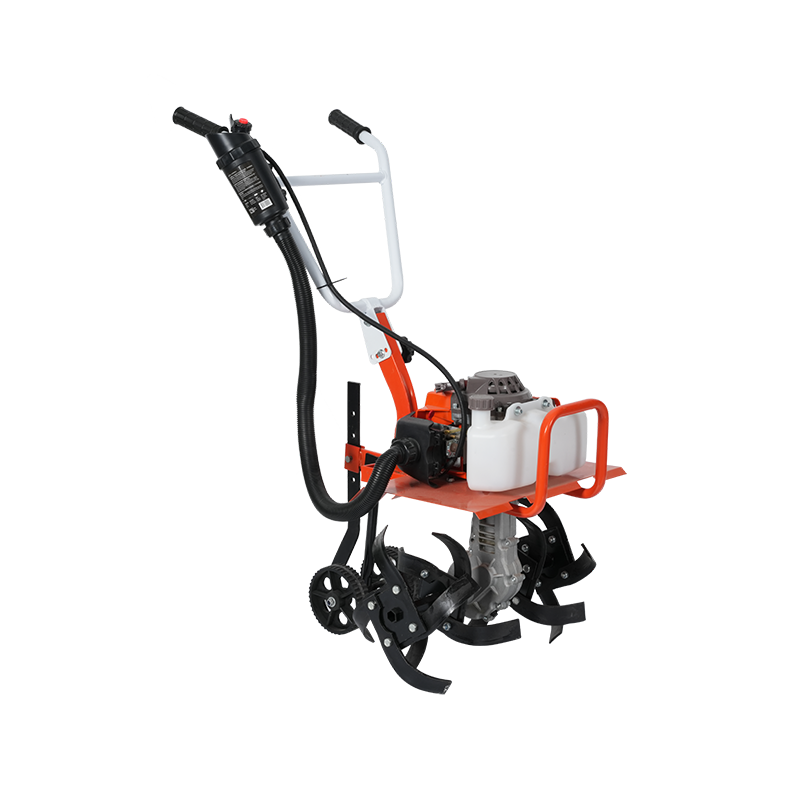
Why Compact Tillage Equipment Is Gaining Market Attention
The rise of small-scale agriculture and greenhouse farming has changed equipment requirements significantly. Large tractors are often impractical for narrow planting rows, indoor cultivation areas, or uneven terrain. As a result, compact tillers are becoming a preferred solution.
Buyers typically evaluate whether a mini tiller can operate effectively in clay soil, sandy ground, or mixed terrain conditions. Flexibility in soil penetration depth and stable torque output are now considered essential features rather than optional upgrades.
Fuel Efficiency Has Become a Key Purchasing Factor
With fluctuating fuel costs in many regions, operational efficiency is now a major concern for equipment buyers. Instead of focusing only on engine displacement, procurement teams are comparing fuel consumption rates under different load conditions.
Engineers frequently search for terms like low fuel consumption garden tiller, small gasoline rotary tiller efficiency comparison, and long runtime mini cultivator. This reflects a shift toward lifecycle cost analysis, where fuel usage over time becomes more important than initial purchase price.
Operator Comfort Directly Impacts Productivity
In field operations, user comfort has a direct influence on productivity and work consistency. Prolonged vibration, poor handle design, and unstable machine balance can significantly reduce efficiency during long working hours.
Modern buyers are increasingly evaluating:
- Vibration reduction through balanced blade systems
- Adjustable handle height for different operators
- Ergonomic grip design for extended use
- Weight distribution for easier directional control
- Safety shielding for soil and debris protection
These design improvements are especially important for landscaping contractors and agricultural service providers who operate equipment daily.
Adaptability Across Soil Conditions Is a Major Concern
Different regions present very different soil challenges. A machine that performs well in loose soil may struggle in compact or rocky environments. This is why adaptability has become a key evaluation point in procurement decisions.
As a manufacturer, we focus on optimizing blade structure and gearbox stability to ensure consistent performance across multiple soil types. This includes reinforced transmission systems, adjustable working widths, and replaceable blade configurations designed for varying field conditions.
Maintenance Cost and Service Life Expectations
Buyers are no longer satisfied with short-term performance alone. They expect equipment to operate reliably over multiple planting seasons with minimal downtime.
Common evaluation criteria include:
- Ease of replacing wearing parts such as blades and belts
- Availability of standardized spare components
- Engine service interval recommendations
- Protection against dust and moisture during field use
- Structural durability under continuous operation
Reducing maintenance complexity directly supports higher equipment utilization rates, especially for rental equipment companies and agricultural cooperatives.
OEM Flexibility and Market-Specific Configuration
Global markets often require different configurations based on terrain, fuel standards, and operator preferences. This has increased demand for OEM and customization services.
Manufacturers are frequently asked to provide:
- Engine variants based on regional fuel compatibility
- Different tilling widths for crop-specific planting systems
- Custom labeling for distribution channels
- Packaging suitable for export logistics
- Assembly adjustments for local regulatory compliance
This flexibility allows distributors to better serve regional agricultural needs without redesigning entire product lines.
Manufacturing Reliability Defines Supplier Value
Beyond technical specifications, buyers increasingly evaluate supplier consistency, production capacity, and quality inspection systems. Stable batch quality ensures that large orders perform uniformly in real farming conditions, reducing operational uncertainty for distributors and end users.
As global agriculture continues to modernize, demand for efficient, adaptable, and easy-to-maintain equipment will continue to grow. Partnering with a dependable Professional Gasoline Mini Tillers Supplier helps buyers secure not only equipment performance but also long-term support for evolving agricultural applications.
Quick Links
Salesman
 James Ying
 Phone: +86-19957983888
 Tel: +86-579-87442360
 Fax: +86-579-87442360
 E-mail:[email protected]
- zachary zhang
- Phone: +86-15988579999
- E-mail: [email protected]
Factory Address
-
 No. 2, Lianjie Industrial Base, Zhiying Town, Yongkang City, Jinhua City, Zhejiang Province, China
Mobile
Copyright © Yongkang Adeytos Industry and Trade Co., Ltd.
All Rights Reserved.
 China Brush Cutter Mower