


 English
 中文简体
中文简体
ADEYTOS
ADEYTOS
ADEYTOS
ADEYTOS
ADEYTOS
ADEYTOS
ADEYTOS
ADEYTOS
ADEYTOS
ADEYTOS
ADEYTOS
ADEYTOS
ADEYTOS
ADEYTOS
ADEYTOS
ADEYTOS

Industry News
Home / News / Industry News / Practical Insights Into ODM Power Tool Component Development And Supply Cooperation
Industry News
Practical Insights Into ODM Power Tool Component Development And Supply Cooperation
Market demand for outdoor power tools continues to evolve with changing usage environments, maintenance expectations, and manufacturing efficiency requirements. Within this landscape, ODM Gear Case Assembly, Line Trimmer Head in China, and OEM/ODM Professional Power Tools Supplier have become closely connected topics for manufacturers, distributors, and brand owners seeking structured production support and component optimization.
Rather than focusing only on finished products, many buyers now evaluate internal component engineering, modular compatibility, and long-term supply stability. This shift has pushed attention toward assembly design, replaceable cutting systems, and integrated OEM/ODM cooperation models that support scalable production and adaptable product lines.
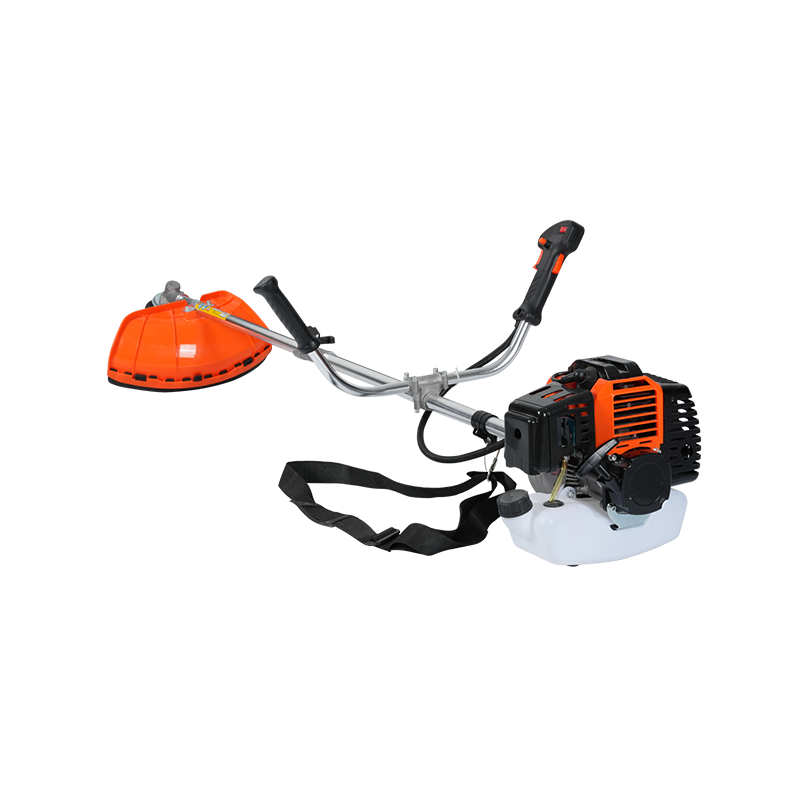
Structural Role Of Gear Case Assembly In Power Tools
ODM Gear Case Assembly plays a central role in transmitting mechanical force and protecting internal drive systems within power tools such as brush cutters, hedge trimmers, and multi-functional garden machines. The assembly is not only a protective housing but also a precision-aligned structure that determines operational stability during load variation.
In practical applications, gear case design must consider torque transmission efficiency, heat dispersion, sealing performance, and vibration control. Manufacturers engaged in ODM development typically evaluate how gear meshing accuracy and housing materials affect long-term operational consistency.
Different markets may require different structural adaptations. For example, regions with dense vegetation or prolonged seasonal use often demand reinforced housing materials and improved dust resistance. In contrast, lighter-duty applications may prioritize weight reduction and simplified maintenance.
ODM-based production allows structural modifications without redesigning the entire tool system. This flexibility helps brands respond to shifting market needs while maintaining compatibility with existing engine or motor platforms.
Manufacturing Considerations For Line Trimmer Head Systems In China
Line Trimmer Head in China has developed into a widely recognized production category due to its integration of machining precision, polymer material selection, and assembly efficiency. The trimmer head functions as the direct cutting interface between the machine and vegetation, making its structural integrity and feeding mechanism essential.
In manufacturing practice, trimmer heads are often produced using reinforced nylon composites or metal hybrid structures, depending on usage intensity. The internal spool system must maintain consistent line feeding while resisting wear caused by repeated high-speed rotation.
Production in China often focuses on balancing cost efficiency with functional durability through standardized mold development and automated injection processes. However, variations still exist between different factories in terms of tooling precision, material sourcing, and testing procedures.
Another important consideration is compatibility. Many international buyers require trimmer heads that can adapt to multiple shaft sizes and engine configurations. This requires careful attention to adapter design, thread precision, and locking stability during ODM development.
Role Of OEM/ODM Professional Power Tools Supplier In Supply Chain Integration
The involvement of an OEM/ODM Professional Power Tools Supplier extends beyond simple manufacturing. These suppliers typically participate in product design coordination, prototype testing, material selection, and packaging optimization.
From a procurement perspective, working with such suppliers allows buyers to consolidate multiple production stages under one development framework. Instead of managing separate component vendors, brands can coordinate gear cases, cutting heads, and engine systems through unified technical communication.
ODM cooperation also supports iterative improvement. Feedback from field usage can be integrated into structural adjustments such as reinforcement of stress points, optimization of airflow channels, or modification of assembly tolerances.
OEM arrangements, on the other hand, often focus on brand customization, including labeling, color schemes, and packaging structure, while maintaining standardized internal mechanisms.
Material Selection And Quality Control Approach
Material selection significantly influences the performance of both gear case assemblies and trimmer heads. Engineering teams typically evaluate mechanical strength, thermal resistance, and aging stability before finalizing production materials.
For gear cases, aluminum alloys and high-strength engineered plastics are commonly used depending on torque load requirements. For trimmer heads, reinforced polymer materials are preferred due to their balance between flexibility and impact resistance.
Quality control procedures often include dimensional inspection, rotational balance testing, and stress simulation under load conditions. These processes help ensure that assembled components maintain consistent performance across production batches.
In ODM environments, quality control is usually integrated at multiple stages rather than only at final inspection. This includes incoming material verification, in-process monitoring, and final assembly testing.
Application Scenarios And Custom Engineering Adjustments
Power tool components such as gear case assemblies and trimmer heads are applied across a wide range of environments including residential gardening, agricultural maintenance, and landscape management.
Different applications require different engineering priorities. Residential use typically focuses on ease of handling, noise reduction, and lightweight structure. Agricultural environments require higher resistance to dust, moisture, and prolonged continuous operation. Landscaping services often demand quick replacement capability and multi-angle cutting flexibility.
ODM customization enables manufacturers to adjust structural parameters according to these scenarios. For example, trimmer heads can be designed with bump-feed systems or automatic line adjustment mechanisms, depending on user requirements.
Similarly, gear case assemblies can be modified in gear ratio configuration to optimize torque output for different vegetation densities.
Procurement Process And Technical Collaboration Flow
Cooperation with OEM/ODM suppliers generally follows a structured communication process. It begins with requirement analysis, where product specifications, application environments, and target markets are defined.
Following this stage, engineering teams typically develop technical drawings or sample prototypes. These prototypes are tested for compatibility with engine systems and field performance conditions.
Once structural validation is completed, production tooling is developed. This stage includes mold fabrication for plastic components and machining setup for metal parts.
During mass production, continuous communication remains important to ensure consistency in batch output. Adjustments may be made based on feedback regarding assembly efficiency or field durability.
Logistics coordination also forms part of the cooperation process, especially for international buyers who require stable supply cycles and standardized packaging for distribution networks.
Practical Value Of Integrated Component Development
The integration of ODM Gear Case Assembly, Line Trimmer Head in China, OEM/ODM Professional Power Tools Supplier cooperation models reflects a broader shift in manufacturing strategy. Instead of treating components as isolated products, manufacturers are increasingly developing interconnected systems that support modular upgrades and long-term usability.
This approach allows brands to adjust product configurations without redesigning entire platforms, reducing development cycles and improving adaptability across different market segments.
As power tool applications continue to diversify, component-level engineering and structured supplier collaboration remain central to maintaining functional consistency and operational efficiency across product lines.
Quick Links
Salesman
 James Ying
 Phone: +86-19957983888
 Tel: +86-579-87442360
 Fax: +86-579-87442360
 E-mail:[email protected]
- zachary zhang
- Phone: +86-15988579999
- E-mail: [email protected]
Factory Address
-
 No. 2, Lianjie Industrial Base, Zhiying Town, Yongkang City, Jinhua City, Zhejiang Province, China
Mobile
Copyright © Yongkang Adeytos Industry and Trade Co., Ltd.
All Rights Reserved.
 China Brush Cutter Mower