


 English
 中文简体
中文简体
ADEYTOS
ADEYTOS
ADEYTOS
ADEYTOS
ADEYTOS
ADEYTOS
ADEYTOS
ADEYTOS
ADEYTOS
ADEYTOS
ADEYTOS
ADEYTOS
ADEYTOS
ADEYTOS
ADEYTOS
ADEYTOS

Industry News
Industry News
How Is Outdoor Equipment Demand Reshaping the Power Tools Industry?
The global power tools market is experiencing steady growth driven by construction expansion, forestry management, landscaping services, and rising demand for efficient outdoor maintenance equipment. Buyers are increasingly focused on durability, safety performance, fuel efficiency, and long-term maintenance costs rather than only initial purchase price. In this context, the role of a Professional Power Tools Supplier has become more important as procurement teams look for stable quality, reliable engineering standards, and consistent supply capability across different working environments.
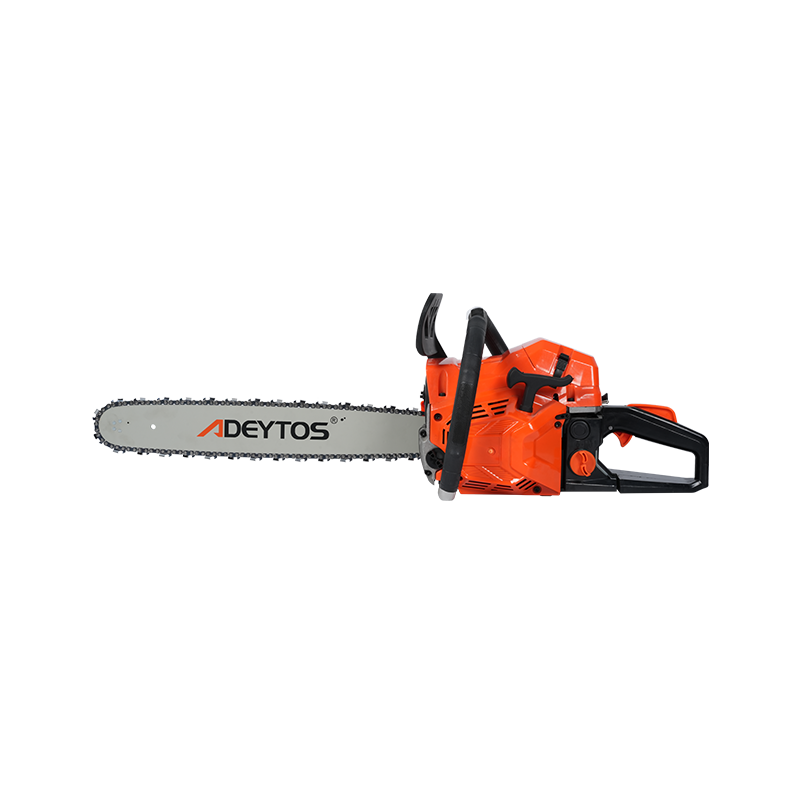
Recent industry search trends show strong interest in engine efficiency, anti-vibration systems, safety compliance, and long-service-life components, especially for heavy-duty outdoor applications.
Why Is Equipment Reliability a Top Priority in Outdoor Operations?
In forestry, landscaping, and construction environments, equipment failure can directly impact productivity and operational safety. As a result, reliability has become a core purchasing factor.
Buyers are prioritizing tools that offer:
- Stable performance under continuous heavy-load operation
- Reduced breakdown risk in harsh outdoor conditions
- Longer service intervals with minimal maintenance
- Consistent cutting or drilling efficiency
Reliability is now directly linked to labor efficiency and project timelines.
How Are Fuel Efficiency Standards Influencing Chainsaw Design?
Gasoline-powered equipment remains widely used in forestry and agricultural applications, but fuel efficiency expectations are rising due to cost and environmental considerations.
Key development trends include:
- Improved engine combustion efficiency
- Reduced fuel consumption per operating hour
- Lower emissions output in modern engine systems
- Optimized carburetor and air intake design
These improvements help operators reduce long-term operational costs while maintaining performance.
Why Is Operator Safety Becoming a Central Engineering Focus?
Safety regulations and workplace standards in many regions are becoming stricter, especially for high-power cutting tools. Manufacturers are required to integrate more protective features into equipment design.
Common safety enhancements include:
- Anti-kickback chain systems
- Improved chain brake response mechanisms
- Low-vibration handle structures
- Enhanced protective shielding design
Safety improvements are now a mandatory expectation in professional-grade tools.
How Is Ergonomics Improving Long-Term Work Efficiency?
Professional users often operate chainsaws and power tools for extended periods, making ergonomics an important factor in product design.
Key ergonomic considerations include:
- Balanced weight distribution for reduced fatigue
- Anti-vibration handle systems for better control
- Easy-start mechanisms for quicker operation
- Comfortable grip design for prolonged use
Better ergonomics directly improves productivity and reduces operator strain.
Why Is Spare Parts Availability Important for Buyers?
Maintenance and repair support is a major concern for international buyers, especially in remote or high-usage environments where downtime is costly.
Procurement teams are focusing on:
- Availability of compatible replacement parts
- Standardized component design for easier maintenance
- Long-term supply stability for critical parts
- Reduced repair complexity for field technicians
Strong after-sales support increases product lifecycle value.
Manufacturer Insight: What Are Global Buyers Expecting?
As a manufacturer in outdoor power equipment, we observe a shift toward performance consistency, safety compliance, and long-term operational value. Buyers are no longer selecting products based only on specifications—they evaluate full lifecycle performance.
Typical OEM requirements include:
- Stable engine performance across different climates
- Consistent quality control across production batches
- Custom configurations for different market needs
- Scalable supply capability for large procurement orders
This reflects the increasing professionalization of the global power tools market.
Is Engineering Quality Defining the Future of Outdoor Power Tools?
As global demand for forestry, landscaping, and construction equipment continues to grow, product performance and reliability are becoming key purchasing drivers. Power tools are no longer simple mechanical devices—they are essential productivity assets.
In this evolving market, working with a reliable Professional Gasoline Chainsaw Factory helps ensure consistent performance, improved operational safety, and long-term supply stability for global industrial and outdoor applications.
Quick Links
Salesman
 James Ying
 Phone: +86-19957983888
 Tel: +86-579-87442360
 Fax: +86-579-87442360
 E-mail:[email protected]
- zachary zhang
- Phone: +86-15988579999
- E-mail: [email protected]
Factory Address
-
 No. 2, Lianjie Industrial Base, Zhiying Town, Yongkang City, Jinhua City, Zhejiang Province, China
Mobile
Copyright © Yongkang Adeytos Industry and Trade Co., Ltd.
All Rights Reserved.
 China Brush Cutter Mower