


 English
 中文简体
中文简体
ADEYTOS
ADEYTOS
ADEYTOS
ADEYTOS
ADEYTOS
ADEYTOS
ADEYTOS
ADEYTOS
ADEYTOS
ADEYTOS
ADEYTOS
ADEYTOS
ADEYTOS
ADEYTOS
ADEYTOS
ADEYTOS

Industry News
Home / News / Industry News / Which Ground Conditions Should You Consider Before Choosing a Gasoline Earth Auger?
Industry News
Which Ground Conditions Should You Consider Before Choosing a Gasoline Earth Auger?
Choosing an earth auger by engine size alone can lead to disappointing results when actual ground conditions are different from expectations. Soil density, clay content, roots, gravel, drilling diameter and required depth all influence how much resistance the cutting system must handle. For contractors, landscapers, agricultural users and equipment distributors, working with a Professional Gasoline Earth Augers Supplier means looking beyond basic engine specifications and matching the complete drilling setup to the jobsite. This approach can improve hole quality while helping users avoid unnecessary strain on the machine.
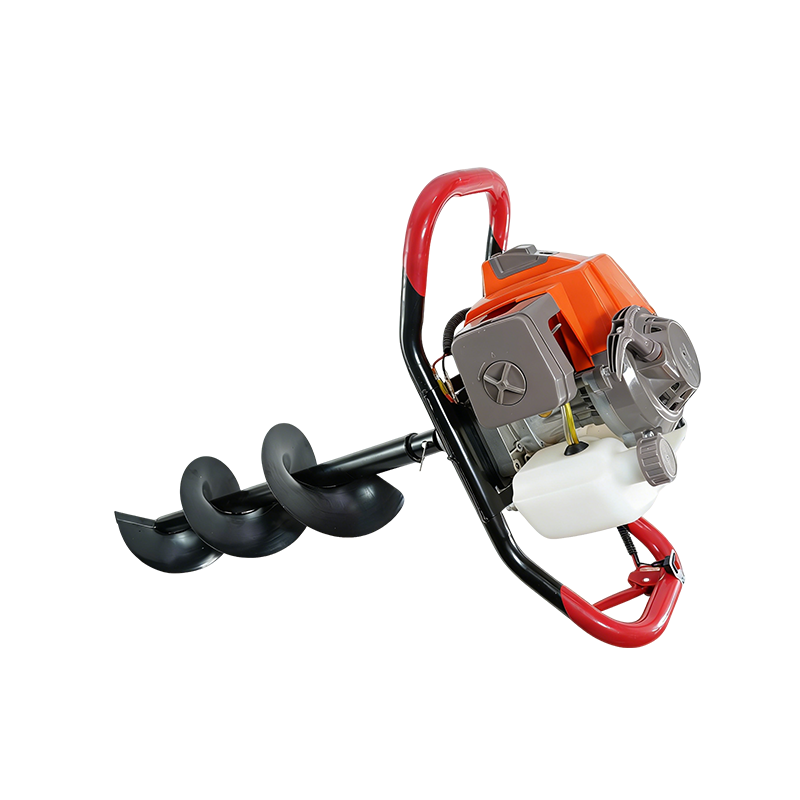
Start With the Soil, Not the Engine
Ground conditions determine how easily an auger can penetrate and remove material. Loose topsoil and sandy ground generally require a different cutting approach from compacted clay, root-filled soil or mixed gravel.
Recent industry guidance also emphasizes that ground conditions influence cutting resistance, wear and drilling performance.
Before selecting equipment, buyers should identify the typical soil encountered at the intended worksite. A machine designed around easy ground may not provide the same practical performance when used repeatedly in dense or resistant soil.
Match Torque With the Drilling Task
Engine power is important, but it does not tell the complete story. The relationship between engine output, transmission, auger diameter and cutting resistance determines how effectively the machine can maintain drilling performance.
A larger diameter bit generally places greater demand on the drive system, while dense ground can further increase resistance. For this reason, manufacturers often develop different power and torque configurations for different drilling conditions.
For buyers, the better question is not simply “How powerful is the engine?” but “Does the complete drive system match the diameter, depth and ground conditions I need?”
Choose the Auger Bit for the Application
The bit is the part that directly engages with the ground, so its configuration should correspond with the material being drilled. Standard cutting edges may be appropriate for ordinary soil, while harder or root-filled ground may require a more suitable tooth or cutting configuration.
Commercial auger guidance similarly recommends selecting bit geometry and cutting components according to soil conditions and the intended application.
For OEM and wholesale buyers, offering compatible bit options can make the equipment more useful across different projects without requiring a completely different power unit for every task.
Consider Diameter and Hole Depth Together
Hole diameter and drilling depth should be evaluated as a pair. A machine may handle a smaller-diameter hole efficiently but experience greater resistance when the same ground is drilled with a wider bit.
Depth can introduce another consideration because the auger must continue removing material as it penetrates farther into the ground. Depending on the application, extension systems or different auger configurations may be required.
This is especially relevant for fencing, tree planting, sign installation and agricultural work, where the required hole dimensions can vary between projects.
Think About Operator Handling
Professional users may operate an earth auger for repeated holes rather than a single installation. In these situations, machine weight, handle configuration, vibration management and balance can influence practical productivity.
A gasoline-powered unit can offer useful mobility where electrical access is limited, but the equipment still needs to be manageable for the intended operator. Buyers should therefore evaluate the complete machine rather than comparing engine displacement alone.
For distributors, this also affects which customer applications the product can reasonably serve.
Match the Machine to Real Jobsite Conditions
A useful purchasing specification should describe the actual working environment. Before placing an order, buyers can provide information such as:
- Typical soil composition
- Required hole diameter
- Expected drilling depth
- Frequency of use
- Presence of roots or gravel
- Intended application
- Preferred auger bit configuration
This information allows the manufacturer to recommend a more appropriate combination of power unit, drive system and drilling accessories.
Build the Selection Around the Complete System
An earth auger performs as a system rather than as an isolated engine. The power unit, transmission, shaft, bit and operating conditions all contribute to the final drilling result. Current buyer guidance likewise places soil conditions, power source, auger size and operating requirements among the main factors in equipment selection.
For overseas contractors, landscaping companies, agricultural equipment distributors and other professional users, choosing a Professional Gasoline Earth Augers Supplier should therefore involve a discussion of the actual drilling application. A manufacturer that can match engine performance, auger configuration and ground conditions can provide a more practical solution for fence installation, planting, agricultural work and general ground drilling projects.
Quick Links
Salesman
 James Ying
 Phone: +86-19957983888
 Tel: +86-579-87442360
 Fax: +86-579-87442360
 E-mail:[email protected]
- zachary zhang
- Phone: +86-15988579999
- E-mail: [email protected]
Factory Address
-
 No. 2, Lianjie Industrial Base, Zhiying Town, Yongkang City, Jinhua City, Zhejiang Province, China
Mobile
Copyright © Yongkang Adeytos Industry and Trade Co., Ltd.
All Rights Reserved.
 China Brush Cutter Mower